DIY Dyes
I visited the Met Cloisters museum a couple days ago, and (perhaps surprisingly) one of the most engaging exhibits to me was about how dyes were made in medieval times. See exhibit image:
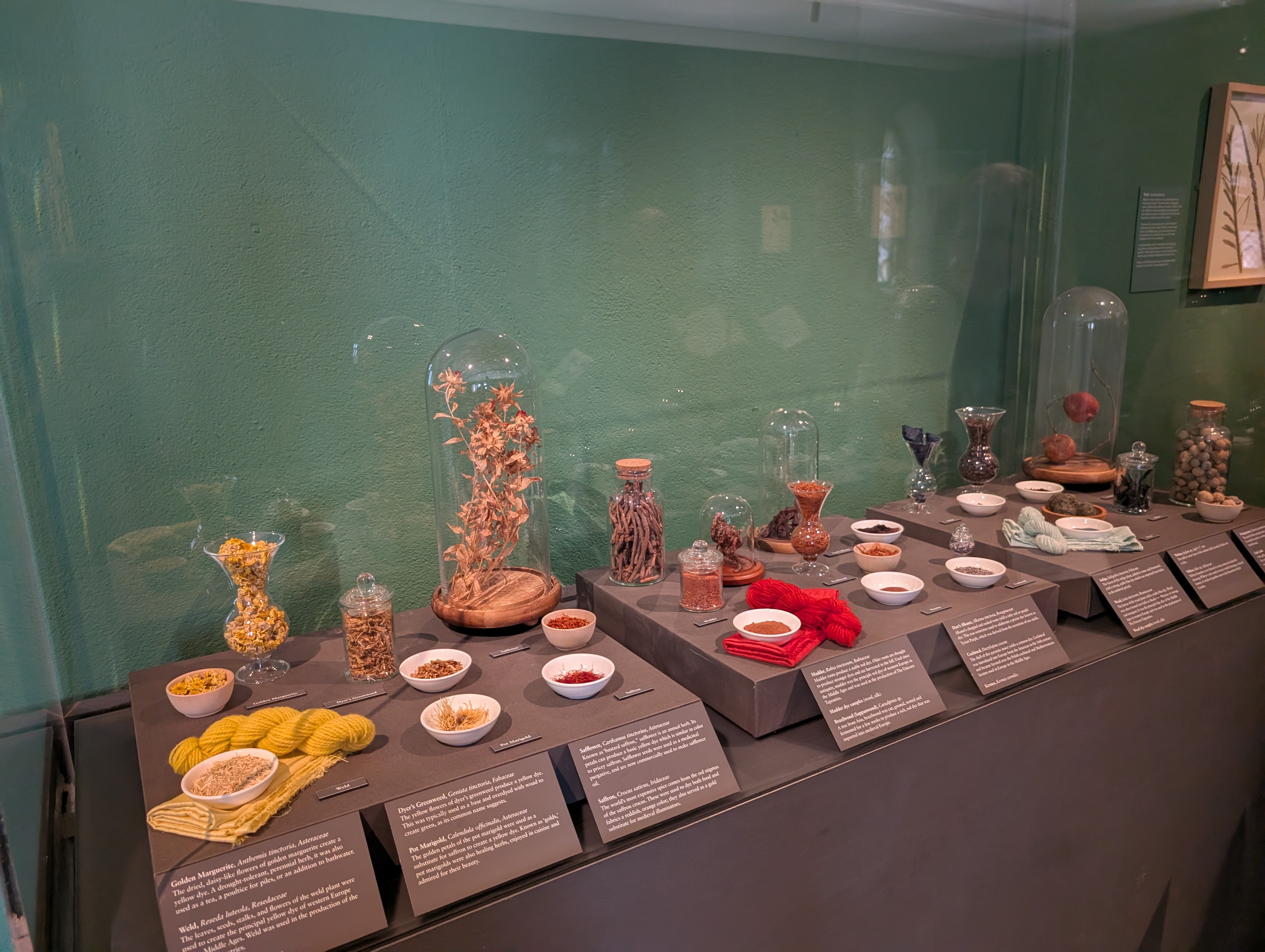
This got me thinking that it would be cool to try making natural dyes on my own. Maybe it could be from materials foraged in the NYC area. I'd like to research this more.
I'm going to paste an initial exploration from ChatGPT with some basic ideas:
"How would i make my own dyes out of natural materials i can find in nyc? For art/paint/something? I'm complete noob"
Natural dyes you can make in NYC (beginner-friendly)
Scope: simple pigment extraction for paper, ink washes, and sketchbook art. No textile chemistry required.
1) What “natural dye” means here
Extract color compounds from plants/foods using water (sometimes vinegar or baking soda). Expect experimentation and some fading over time.
2) Easy starter materials (NYC-available)
Kitchen scraps
-
Onion skins (yellow/red) → gold, rust, orange-brown
-
Avocado pits/skins → dusty pink, peach
-
Red cabbage → purple → blue/green with baking soda
-
Coffee or black tea → browns/sepias
-
Turmeric → intense yellow (not lightfast)
Foraged (parks/markets)
-
Leaves → yellow-green
-
Berries (even inedible ones) → purples/blues (often fade)
-
Walnut shells (farmers markets) → deep brown
-
Dandelion roots → warm yellow-brown
3) Noob-proof extraction
You need
-
Small pot or jar
-
Water
-
Strainer/cloth
-
Watercolor or sketch paper
-
Old brush
Steps
-
Chop/crush plant material.
-
Cover with water (2–3× volume).
-
Simmer 20–60 min (or steep overnight).
-
Strain.
-
Paint directly with the liquid.
4) Make it act more like paint or ink
Thicken
-
A few drops of gum arabic (art store).
-
Optional: tiny drop of honey for flow.
Shift color
-
Vinegar → more red/pink.
-
Baking soda → blue/green shift (especially cabbage).
Test on scrap paper.
5) Improve longevity (basic)
-
Add 1–2 tsp vinegar per cup of dye (helps on paper).
-
Store in the fridge.
-
Fading over weeks/months is normal.
6) Best surfaces
-
Watercolor paper (best)
-
Sketch paper or handmade paper
-
Avoid glossy/coated paper
7) Safe NYC foraging rules
-
Avoid dog-heavy areas and roadsides.
-
Wash everything.
-
Never taste pigments.
-
If unsure about a plant, skip it.
8) First mini-project
Kitchen dye sampler: onion skins, red cabbage, coffee, turmeric.
Make four jars, label them, paint swatches, then modify each with vinegar/baking soda.
9) Next steps (optional)
-
Lake pigments (turn dye into dry pigment)
-
Iron modifiers (blackening inks)
-
Historical inks (walnut ink, oak gall)
Ask if you want a 1-hour starter plan, an NYC-foraging palette, or steps to make watercolor pans.